New Enterprise IT Tools: How Automation & Security Are Redefining IT in 2026
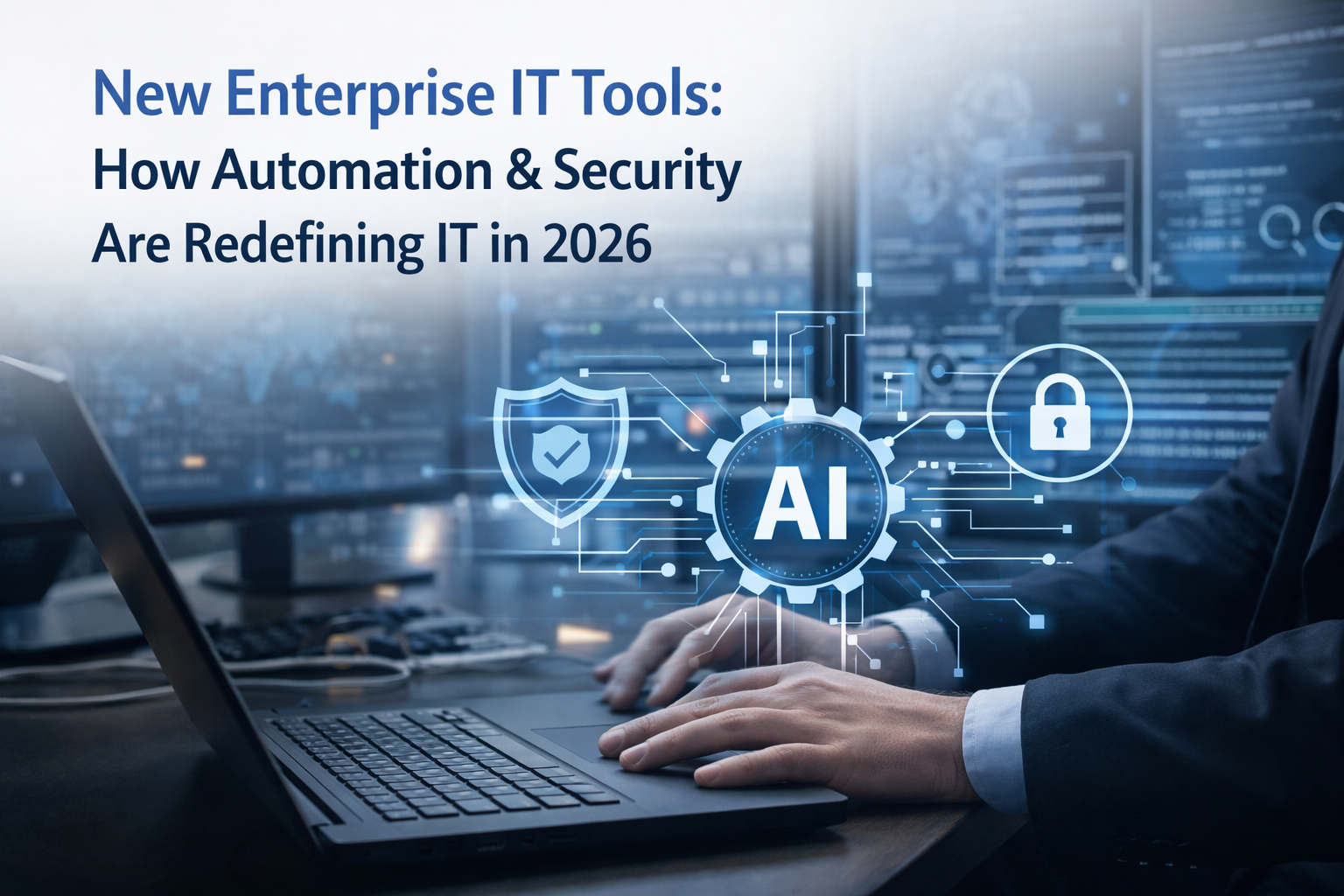
Enterprise IT is going through a major transformation. With cyber threats growing more sophisticated and IT environments becoming more complex, businesses can no longer rely on manual processes or fragmented tools. In 2026, a new generation of enterprise IT tools is emerging—focused heavily on automation and built-in security.
These tools are not just improving efficiency; they are fundamentally changing how organizations manage, protect, and scale their digital infrastructure.
The Rise of Autonomous Security Operations
Modern enterprise tools are moving beyond traditional dashboards and alerts. Today’s platforms act more like intelligent systems that can detect, investigate, and respond to threats automatically.
Security automation tools now:
- Analyze threats in real time
- Correlate data across multiple systems
- Take action without human intervention
Instead of just flagging issues, these systems deliver decisions and execute responses, significantly reducing response time and human workload. (Stellar Cyber)
This shift is giving rise to what experts call “Autonomous SOC (Security Operations Centers)”.
Security Is Now Built Into Every Layer
One of the biggest changes in enterprise IT tools is that security is no longer a separate layer—it’s embedded everywhere.
From cloud platforms to collaboration tools, security features now include:
- Identity and access management (IAM)
- Continuous authentication (Zero Trust)
- Real-time risk monitoring
In fact, modern Zero Trust models now continuously verify users based on behavior, device health, and context—not just login credentials. (Enterprise Management Blog)
Security is becoming dynamic, continuous, and context-aware.
AI-Powered Automation Is Taking Over
AI is at the heart of this transformation. New enterprise tools are leveraging agentic AI systems—software agents that can perform tasks, make decisions, and even collaborate with other systems.
Recent developments show:
- AI agents managing workflows like reporting, research, and operations
- Enterprises adopting platforms that coordinate multiple AI agents
- Automation expanding into business functions like HR, finance, and customer support (Reuters)
The result: faster operations, fewer errors, and scalable automation across the enterprise.
Securing AI: A New Challenge for Enterprises
As AI adoption grows, so do new security risks. Enterprises are now focusing on tools that can secure AI agents themselves, not just traditional systems.
For example:
- New frameworks allow organizations to track, manage, and control AI agents like employees
- Features include visibility, access control, and even “kill switches” for rogue AI systems (TechRadar)
This marks a major shift toward AI governance and AI security management.
Unified Platforms Replacing Fragmented Tools
Another key trend is consolidation. Enterprises are moving away from managing dozens of disconnected tools and instead adopting unified platforms.
These platforms combine:
- Threat detection (SIEM)
- Response automation (SOAR)
- Endpoint and network security (XDR)
This unified approach improves:
- Visibility across systems
- Faster response times
- Reduced operational complexity
In fact, many organizations are replacing standalone tools with integrated, automation-first platforms. (Stellar Cyber)
Why This Matters for Businesses
The shift toward automation and security-focused tools is not just a tech upgrade—it’s a business necessity.
Organizations adopting these tools are seeing:
- Faster incident response
- Reduced operational costs
- Improved compliance and governance
- Better resilience against cyberattacks
At the same time, cyber threats are evolving rapidly, with attacks becoming faster and more AI-driven—making automation essential for defense. (Pantherun)
Enterprise IT in 2026 is no longer about managing systems—it’s about building intelligent, self-defending ecosystems.
Automation is reducing the burden on IT teams, while embedded security is ensuring that every layer of the organization is protected. The companies that embrace these tools early will not only improve efficiency but also gain a significant competitive advantage in an increasingly digital and high-risk world.