Autonomous Cyber Defense: AI Systems That Fight Hackers in Real-Time
Cybersecurity has always been a race—attackers innovate, defenders react. For decades, organizations have relied on firewalls, antivirus software, and human analysts to detect and respond to threats. But the nature of cyberattacks has changed. Today’s threats are faster, more sophisticated, and often powered by artificial intelligence themselves. In this environment, traditional, reactive defense models are no longer enough.
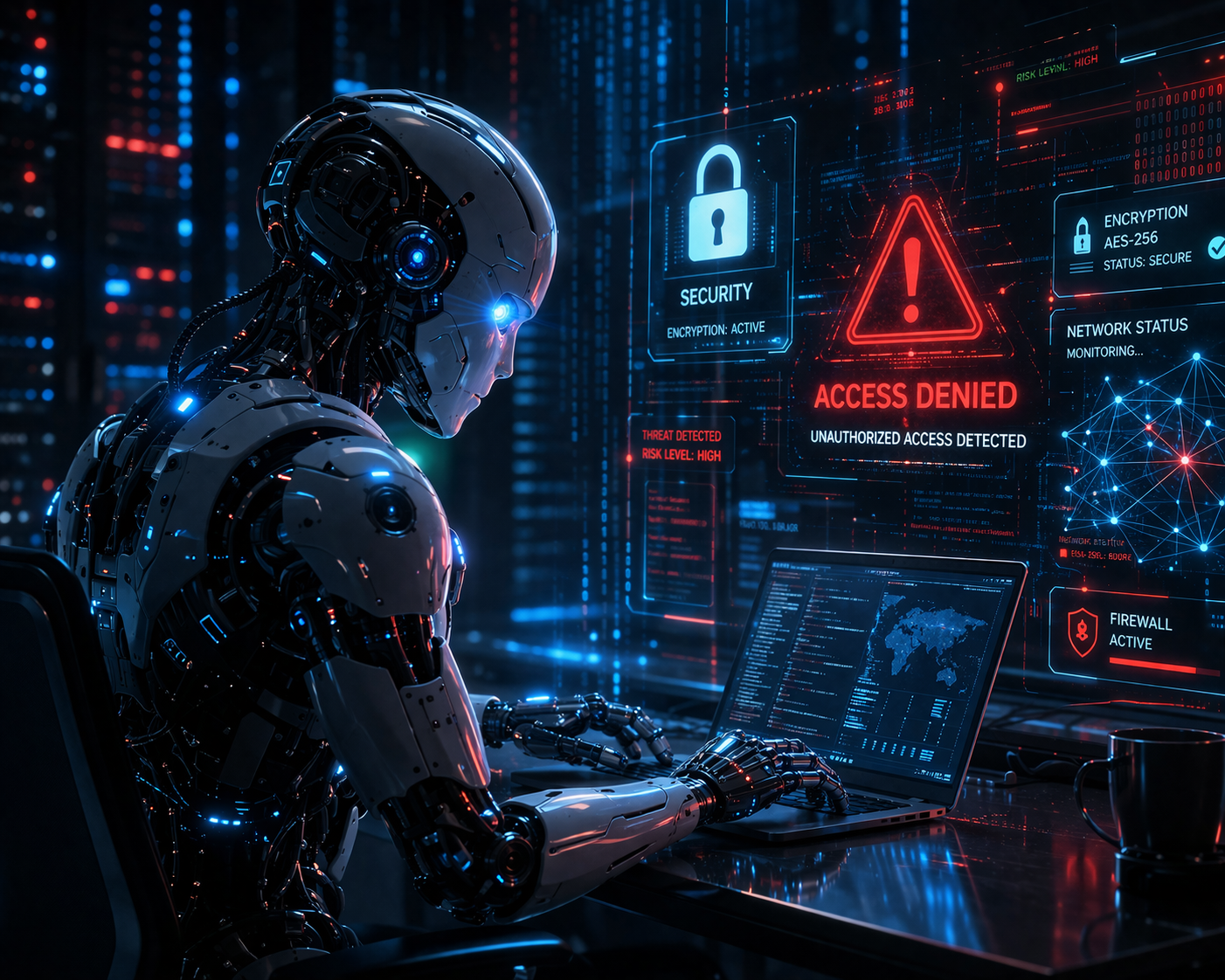
A new paradigm is emerging: autonomous cyber defense. These are AI-driven systems capable of detecting, analyzing, and responding to cyber threats in real time—often faster than any human team could manage. Instead of waiting for alerts and manually investigating incidents, organizations are beginning to deploy systems that actively fight hackers as attacks unfold.
At its core, autonomous cyber defense represents a shift from passive protection to active engagement.
In traditional cybersecurity models, detection is only the first step. A system flags unusual activity, an alert is generated, and a human analyst investigates. This process can take minutes, hours, or even days—time that attackers can use to move laterally across networks, escalate privileges, and exfiltrate data.
Autonomous systems collapse this timeline. They continuously monitor network behavior, identify anomalies, and take action instantly. If an AI system detects suspicious activity—such as unusual login patterns, unexpected data transfers, or abnormal system behavior—it can isolate affected systems, block malicious traffic, revoke access, and even deploy countermeasures without waiting for human approval.
This speed is critical. In modern cyberattacks, the difference between containment and catastrophe can be measured in seconds.
What makes these systems possible is the convergence of multiple AI capabilities. Machine learning models analyze vast amounts of data to establish a baseline of “normal” behavior across users, devices, and applications. When deviations occur, the system doesn’t just flag them—it interprets them in context.
For example, a login from a new location might not be suspicious on its own. But if it’s followed by rapid access to sensitive files and attempts to escalate privileges, the system recognizes a pattern consistent with an attack. Instead of generating multiple alerts, it understands the sequence as a coordinated threat and responds accordingly.
This ability to connect the dots in real time is what differentiates autonomous defense from traditional tools.
Another defining feature is adaptability. Cyber threats are constantly evolving, with attackers using new techniques to bypass defenses. Static rules and signatures quickly become outdated. Autonomous systems, however, learn continuously. They adapt to new patterns, refine their models, and improve their responses over time.
This creates a dynamic defense environment where the system becomes more effective with every interaction. It is not just reacting to known threats—it is anticipating unknown ones.
In many ways, this mirrors the behavior of attackers themselves. Just as hackers use AI to automate reconnaissance and exploit vulnerabilities, defenders are now using AI to counter those actions in real time.
The rise of autonomous cyber defense also changes the role of human security teams. Rather than being on the front lines of every incident, analysts become supervisors and strategists. They define policies, review complex cases, and refine the system’s behavior.
This shift is not about replacing humans, but augmenting them. Cybersecurity professionals are often overwhelmed by the volume of alerts generated by traditional systems. Autonomous AI reduces this noise by handling routine incidents automatically, allowing humans to focus on high-impact threats and strategic planning.
It transforms security teams from reactive responders into proactive defenders.
However, this transformation is not without challenges.
One of the biggest concerns is trust. Allowing an AI system to take autonomous action—such as shutting down systems or blocking access—requires confidence that it will make the right decisions. False positives can disrupt operations, while false negatives can allow attacks to succeed.
To address this, organizations must implement robust governance frameworks. Autonomous systems should operate within clearly defined boundaries, with transparency into their decision-making processes. Human oversight remains essential, especially in critical environments.
Another challenge is adversarial AI. As defenders adopt AI, attackers are doing the same. Hackers can attempt to manipulate AI systems, feeding them misleading data or exploiting their decision-making processes. This creates a new battleground where AI systems must not only detect threats but also defend against attempts to deceive them.
Security, in this context, becomes a contest between intelligent systems.
The implications of autonomous cyber defense extend beyond individual organizations. At a broader level, these systems could reshape the entire cybersecurity landscape.
Imagine a future where networks are protected by interconnected AI agents that share threat intelligence in real time. When one system detects a new attack pattern, it instantly updates others, creating a collective defense network. Threats could be neutralized globally within seconds, reducing the impact of large-scale cyberattacks.
This kind of coordinated defense could be particularly valuable in protecting critical infrastructure, financial systems, and healthcare networks—areas where cyber threats can have real-world consequences.
At the same time, ethical and regulatory considerations will play a crucial role. Autonomous systems must be designed to respect privacy, comply with laws, and avoid unintended consequences. Decisions made by AI—especially those that impact users or operations—must be explainable and accountable.
Organizations will need to strike a balance between automation and control, ensuring that the benefits of speed and efficiency do not come at the cost of transparency and trust.
Looking ahead, autonomous cyber defense is likely to become a standard component of modern security strategies. As threats continue to evolve, the need for real-time, intelligent response systems will only grow.
The future of cybersecurity will not be defined by stronger walls, but by smarter systems—systems that can think, adapt, and act at machine speed.
In this new reality, the question is no longer whether AI will be used in cyber defense. It is how effectively it can be integrated into a broader strategy that combines technology, human expertise, and governance.
Because in the race between attackers and defenders, speed is everything—and autonomous AI is redefining what speed means.