
Autonomous AI Employees: Designing Organizations Where Agents Replace Roles
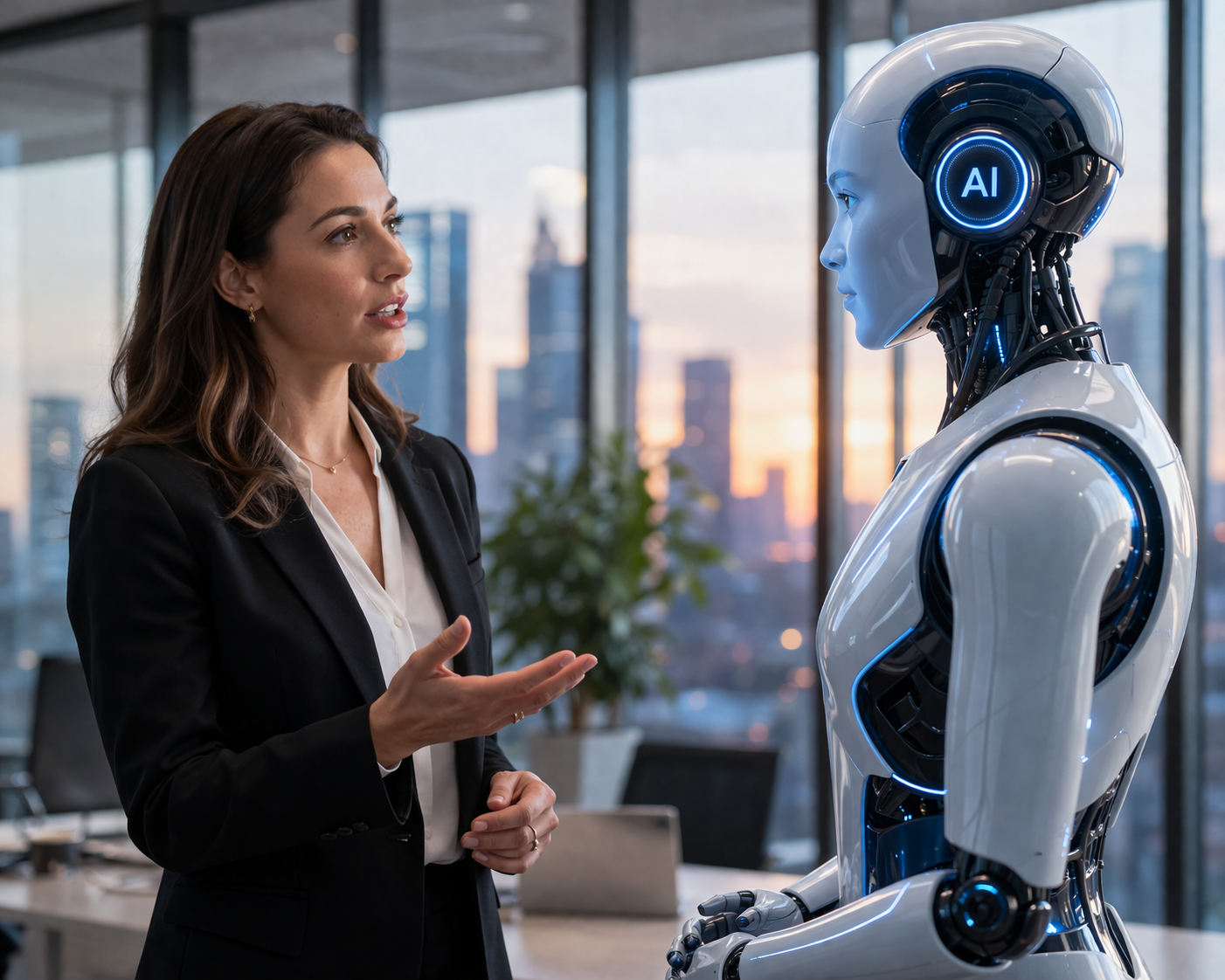
The idea of an “employee” is evolving faster than most organizations are prepared for. For decades, companies have been structured around human roles—job titles, departments, and clearly defined responsibilities. But with the rise of autonomous AI agents, this model is beginning to shift in a fundamental way. We are entering an era where work is no longer tied to a person, but to an intelligent system capable of executing it independently.
Autonomous AI agents are not just tools that assist employees; they are increasingly capable of performing entire roles. They can analyze data, make decisions, execute workflows, and even collaborate with other systems. What makes them transformative is their ability to act with a level of independence. They don’t wait for instructions at every step—they interpret goals, plan actions, and adapt based on outcomes. This changes not only how work is done, but how organizations themselves are designed.
In traditional organizations, structure is built around functions—marketing, finance, operations, human resources—each staffed with people who carry out specific tasks. These functions interact through processes that are often slow and fragmented. Meetings, approvals, and handoffs define the rhythm of work. Autonomous AI agents disrupt this model by removing the need for many of these intermediaries. Instead of organizing around functions, organizations can begin organizing around outcomes.
Imagine a company where the goal is not to maintain a “customer support department,” but to ensure that every customer query is resolved quickly and effectively. In such a system, a network of AI agents could handle inquiries, analyze sentiment, escalate complex issues, and learn from past interactions. Human employees would step in only when judgment, empathy, or strategic thinking is required. The focus shifts from managing people to managing results.
This transformation introduces a new way of thinking about roles. In an AI-driven organization, roles become fluid rather than fixed. An AI agent does not need a job title—it needs a purpose. It can take on multiple responsibilities depending on demand, moving seamlessly between tasks. This flexibility allows organizations to operate with unprecedented efficiency. Work can happen continuously, without the constraints of working hours, fatigue, or manual coordination.
However, replacing roles with agents is not simply a matter of deploying technology. It requires a deep redesign of workflows. Autonomous systems must be orchestrated carefully to ensure they work together rather than in isolation. When multiple agents are operating simultaneously, each with its own capabilities and objectives, coordination becomes critical. Without it, organizations risk creating confusion rather than efficiency.
This is where agentic workflows come into play. Unlike traditional linear processes, agentic workflows are dynamic and adaptive. They allow agents to communicate, share information, and adjust their behavior based on real-time conditions. Instead of a rigid sequence of steps, work becomes a living system that evolves as it progresses. Designing such workflows requires a new kind of thinking—one that focuses on systems rather than tasks.
Trust is another cornerstone of this transformation. In human organizations, trust is built through relationships and experience. With AI agents, trust must be engineered into the system. Organizations need transparency into how decisions are made, the ability to audit actions, and mechanisms to intervene when necessary. This is especially important in industries where mistakes can have serious consequences. Autonomous does not mean unaccountable. In fact, greater autonomy demands stronger governance.
The role of humans in this new landscape does not disappear—it evolves. As AI agents take over routine and repetitive tasks, humans move into roles that require creativity, critical thinking, and emotional intelligence. They become designers of systems, supervisors of agents, and decision-makers in complex scenarios. Rather than doing the work themselves, they ensure that the work is done correctly.
This shift can be compared to the introduction of autopilot systems in aviation. While automation handles many aspects of flying, pilots remain essential. Their role is not to control every detail, but to oversee the system, make strategic decisions, and step in when needed. Similarly, in AI-driven organizations, humans act as orchestrators rather than operators.
Culturally, this transition presents both opportunities and challenges. Work has long been a source of identity and purpose. As AI agents take on more responsibilities, organizations must find new ways to engage their workforce. The goal should not be to replace people, but to empower them. By removing repetitive tasks, AI can free employees to focus on meaningful and impactful work.
At the same time, there will be concerns about job displacement and uncertainty. Addressing these concerns requires transparency, reskilling initiatives, and a clear vision for how humans and AI will coexist. Organizations that approach this transition thoughtfully will not only retain talent but also build a more resilient and adaptive workforce.
From a business perspective, the adoption of autonomous AI employees is becoming a competitive advantage. Companies that integrate agents effectively can operate faster, scale more easily, and respond to change with greater agility. They can deliver better customer experiences, reduce costs, and unlock new opportunities for innovation. In contrast, organizations that cling to traditional structures may find themselves falling behind.
Yet, the true potential of AI-driven organizations lies beyond efficiency. It lies in the ability to rethink what is possible. When routine work is automated, resources can be redirected toward innovation, exploration, and growth. AI agents can uncover patterns and insights that humans might overlook, enabling better decisions and new strategies.
Looking ahead, the organizations of the future will likely be hybrid systems—combining human intelligence with artificial intelligence in a seamless way. These organizations will not be defined by rigid hierarchies, but by networks of agents and people working together. Leadership in this environment will require a new set of skills, including the ability to design systems, manage complexity, and align technology with human values.
The rise of autonomous AI employees is not just a technological shift—it is a redefinition of work itself. It challenges long-standing assumptions about roles, responsibilities, and organizational design. It asks us to rethink how value is created and how people contribute.
Ultimately, the success of this transformation will depend on how thoughtfully it is implemented. Organizations that embrace AI agents while keeping humans at the center of purpose and decision-making will be best positioned to thrive. The future of work is not about humans versus machines—it is about humans and machines working together in ways that were once unimaginable.