
Commonwealth Bank Introduces NFC ePassport Scanning for Faster Customer Onboarding
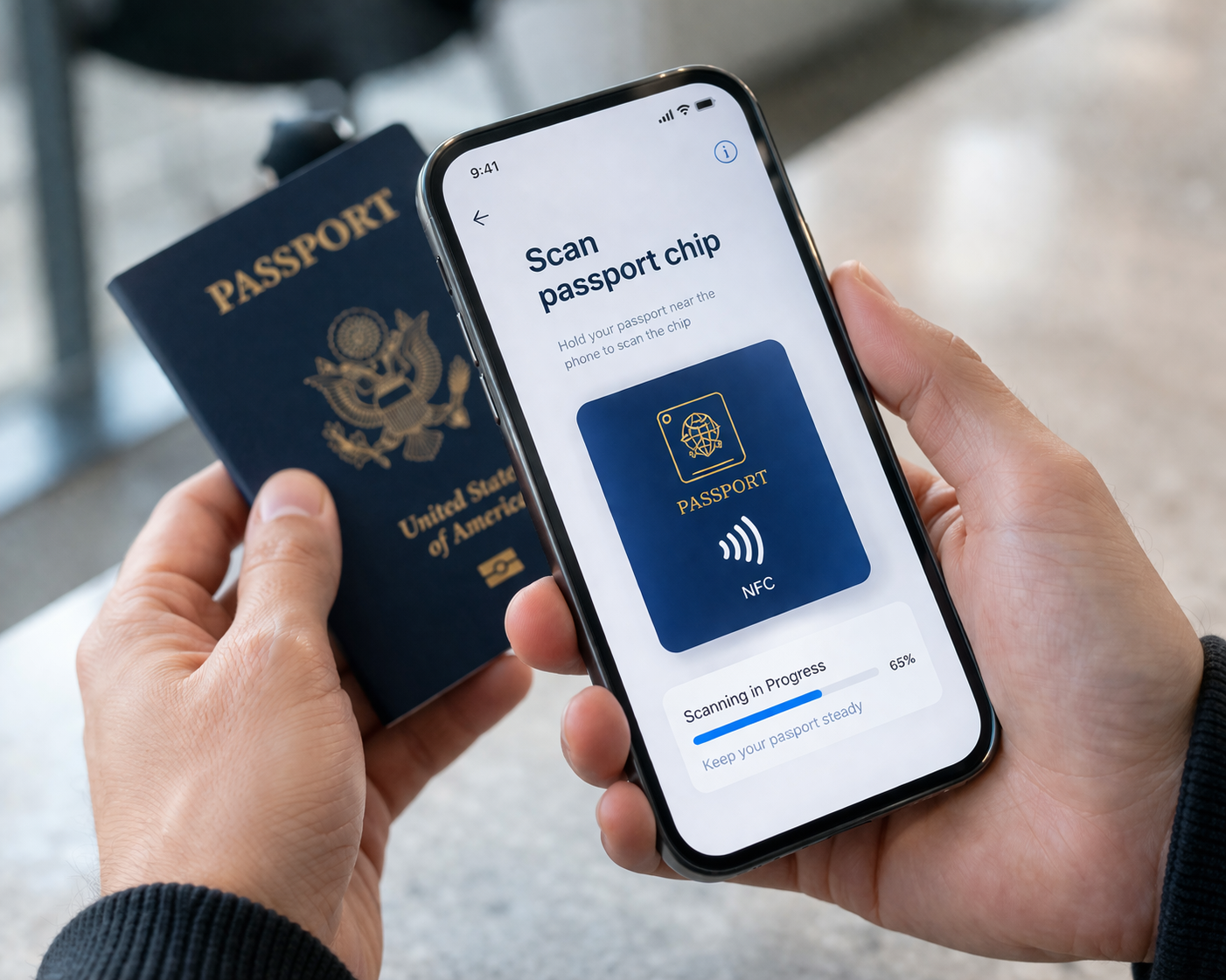
Commonwealth Bank (CBA) has rolled out a new customer onboarding system that uses near field communication (NFC) technology to scan ePassports, enabling faster and more streamlined identity verification.
The system, which has been live since January, has already been used to onboard more than 2,700 new customers, marking a significant step forward in digital identity verification within the Australian banking sector.
Faster Onboarding with a Single Document
The new process allows customers to verify their identity using just their ePassport, eliminating the need for multiple documents typically required under traditional onboarding methods.
By tapping their passport to a smartphone, users can enable the app to read the embedded NFC chip, which contains biometric data such as a photo. This data is then matched with a live selfie taken during onboarding.
According to Sascha Thiel, General Manager of Customer Identity and Digital Security at CBA, the entire process can be completed in as little as one minute—significantly reducing friction for new customers.
Built In-House with Secure Technology
CBA spent approximately six months developing the system, designing the onboarding flows internally rather than outsourcing them to third-party providers.
While the bank uses multiple identity technology providers within its broader infrastructure, the NFC scanning and user experience are fully integrated into the CBA mobile app for both iOS and Android devices.
The system leverages the secure biometric data stored in modern ePassports, allowing for accurate and efficient identity verification.
Privacy and Compliance at the Core
The bank emphasized that the solution complies with Australian privacy laws and regulatory requirements, including Know Your Customer (KYC) and Anti-Money Laundering (AML) standards.
Importantly, biometric data used during the verification process is not stored. The passport image and selfie are used solely for real-time matching and are not retained after the process is completed.
This approach ensures that customer data remains protected while still meeting strict regulatory obligations.
Expanding Access Beyond Domestic Users
Initially available to Australian customers, the NFC onboarding feature is expected to expand to include migrants and international students, broadening access to banking services for new arrivals.
This aligns with broader trends in digital identity verification, where financial institutions are increasingly adopting technology to simplify onboarding while maintaining high security standards.
Following Global Trends in Digital Identity
While the technology is relatively new in Australia, NFC-based passport verification has already been adopted by banks in Europe, particularly among neobanks operating under the EU’s eIDAS framework.
Solutions such as ReadID are widely used across Nordic and Benelux countries, demonstrating the growing global adoption of biometric and NFC-based identity systems.
A Step Toward Seamless Digital Banking
CBA’s move positions it at the forefront of digital onboarding innovation in Australia. By combining speed, security, and compliance, the bank is redefining how customers interact with financial services from the very first touchpoint.
As digital identity technologies continue to evolve, NFC-based onboarding is likely to become a standard feature—helping banks deliver faster, safer, and more user-friendly experiences.