Shadow IT: Hidden Technology Used Inside Companies
In modern organizations, employees use many software applications, cloud services, and digital tools to complete their work. Ideally, all technology used inside a company should be approved and managed by the IT department. However, in many organizations, employees use software, apps, or online services without the knowledge or approval of the IT department. This is known as Shadow IT.
Shadow IT refers to any technology system, software, device, or cloud service used within an organization without official approval from the IT department. Employees often use these tools to make their work easier, faster, or more efficient, but it can create serious security and data risks for the organization.
Shadow IT exists because employees want to work more efficiently. Sometimes official company software is slow, complicated, or does not provide certain features. So employees start using their own tools such as Google Drive, Dropbox, WhatsApp, personal email, online file converters, AI tools, or project management apps without informing the IT department.
For example, an employee might upload company documents to a personal Google Drive to work from home. A team might use WhatsApp to share office documents. A designer might use an online tool to edit images. A developer might use a third-party API or software library without approval. All these are examples of Shadow IT.
Shadow IT is very common in companies that use cloud computing and remote work systems. Today, it is very easy to sign up for online tools and start using them without IT approval. Many software services are free or require only an email address to create an account, which makes Shadow IT more common.
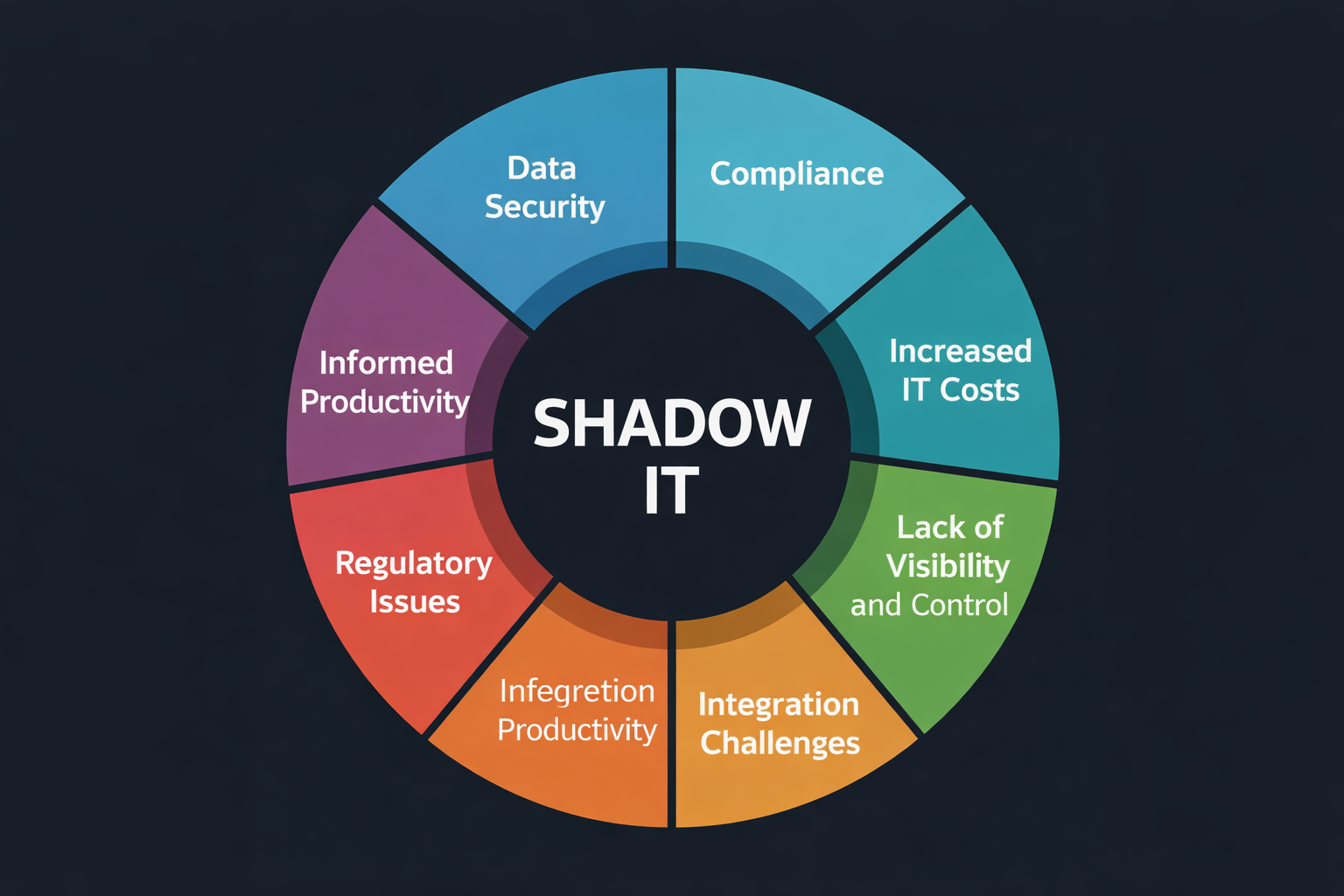
Shadow IT creates several risks for organizations. The biggest risk is data security. If employees store company data on personal apps or cloud services, the company cannot control or protect that data. This can lead to data leaks, data breaches, and loss of sensitive information.
Another risk is cybersecurity. Unauthorized software may contain malware or security vulnerabilities. Hackers often target third-party apps to enter company networks.
Shadow IT also creates compliance and legal risks. Many industries such as banking and healthcare must follow strict data protection laws. If employees store data in unauthorized systems, the company may violate regulations.
Shadow IT also creates data management problems because company data becomes scattered across different platforms. This makes it difficult for companies to track, back up, or delete data when needed.
However, Shadow IT is not always negative. Sometimes it shows that employees need better tools and technology. If many employees are using the same unauthorized tool, it may mean the company should officially adopt that tool.
Companies can manage Shadow IT by creating clear IT policies, providing better approved tools, monitoring network usage, and educating employees about security risks. Many companies now use Shadow IT discovery tools that detect unauthorized apps being used inside the organization.
In the future, Shadow IT may increase because of cloud computing, remote work, and AI tools. Employees can easily access powerful tools online, which makes it harder for IT departments to control all technology usage.