
Smart Cities and Information Technology
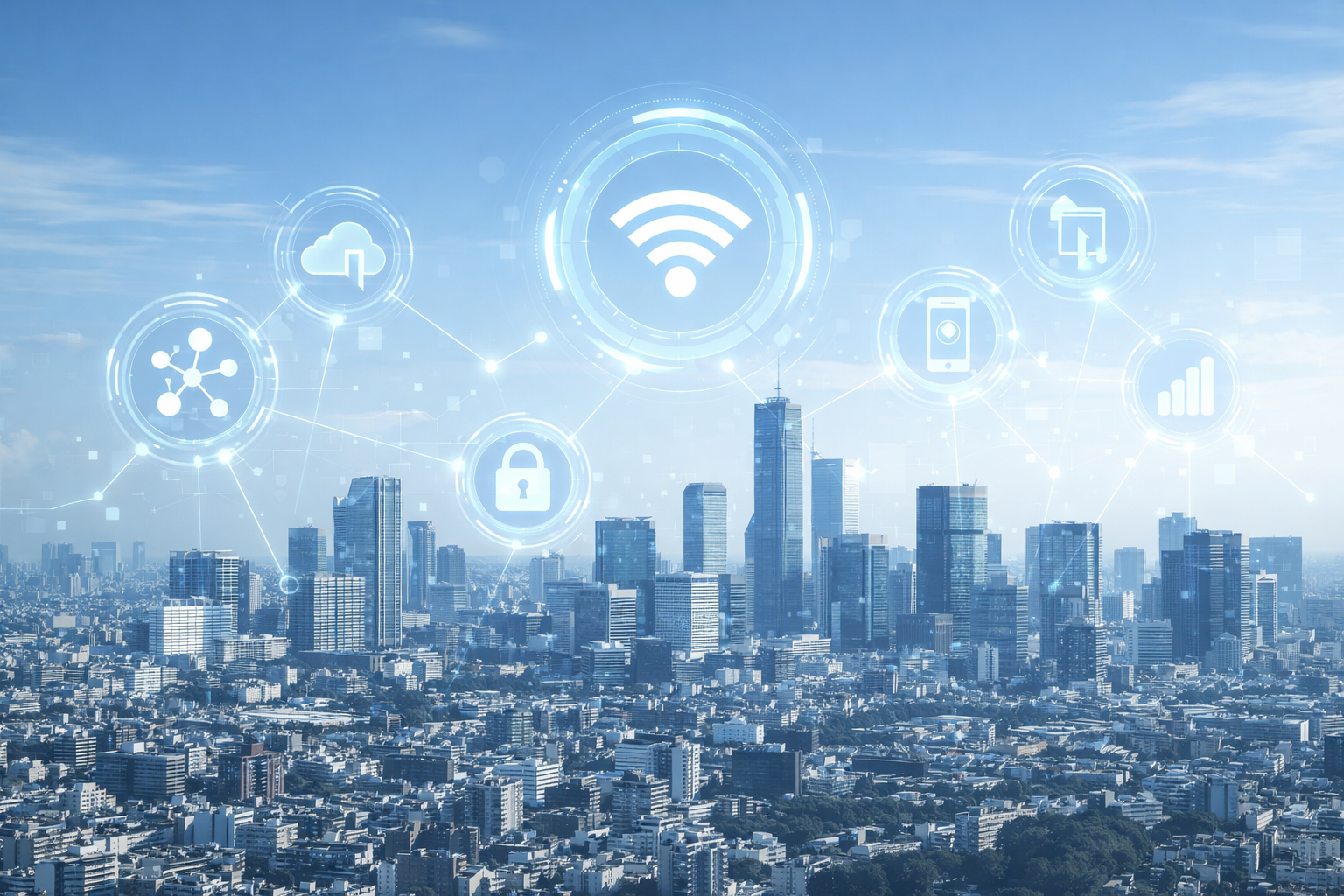
As urban populations continue to grow, cities around the world are facing challenges such as traffic congestion, pollution, energy consumption, waste management, water shortages, and public safety. To solve these problems, governments and urban planners are using Information Technology (IT) to develop what are known as Smart Cities. A smart city uses digital technology, data, and intelligent systems to improve the quality of life for citizens, improve infrastructure, and make city management more efficient.
A smart city is not just about using computers or the internet; it is about using advanced technologies such as the Internet of Things (IoT), Artificial Intelligence (AI), cloud computing, big data, and automation to manage city services in a smarter way. In a smart city, different systems such as traffic management, electricity, water supply, waste management, public transport, healthcare, and security are connected through digital networks and data systems. These systems collect data, analyze it, and make decisions to improve city operations.
One of the most important components of a smart city is the Internet of Things (IoT). IoT refers to devices connected to the internet that can collect and share data. For example, smart traffic signals can monitor traffic and automatically adjust signal timing to reduce traffic congestion. Smart street lights can automatically turn on or off based on movement and daylight, which helps save electricity. Smart water systems can detect water leaks and reduce water wastage. Smart waste management systems can detect when garbage bins are full and send alerts to waste collection services.
Another important technology used in smart cities is big data and data analytics. Smart cities collect a large amount of data from sensors, cameras, mobile devices, and GPS systems. This data is analyzed to understand patterns and improve decision-making. For example, data analysis can be used to predict traffic congestion, plan better public transport routes, reduce crime rates, and improve emergency services. Big data helps city authorities make better decisions based on real-time information.
Artificial Intelligence is also an important part of smart cities. AI systems can analyze data and automate decision-making. For example, AI can be used for traffic prediction, facial recognition for security, smart parking systems, energy consumption optimization, and public service automation. AI chatbots can be used by government websites to answer citizen queries and provide public service information.
Cloud computing is another important technology in smart cities. Smart cities generate a large amount of data that needs to be stored and processed. Cloud computing provides storage and computing power to manage this data. Cloud platforms allow city authorities to access data from anywhere and manage city services more efficiently.
Information Technology is also improving public safety in smart cities. Smart surveillance systems use cameras, AI, and facial recognition to monitor public places and detect suspicious activities. Emergency response systems can detect accidents and automatically send alerts to police or hospitals. Disaster management systems can predict floods, earthquakes, or storms and send warnings to citizens in advance.
Smart cities also use IT for smart transportation. This includes smart traffic signals, smart parking systems, GPS-based public transport tracking, and digital payment systems for transport. Citizens can use mobile apps to check bus or train timings, find parking spaces, and pay tolls or tickets online.
Another important area is smart energy management. Smart grids use IT to monitor electricity usage and distribute power efficiently. Renewable energy sources such as solar and wind power can be integrated into smart grids. Smart meters help consumers monitor their electricity usage and reduce energy consumption.
Healthcare is also improving in smart cities through IT. Smart hospitals use digital health records, telemedicine, AI-based diagnosis, and remote patient monitoring systems. Citizens can consult doctors online, book appointments through mobile apps, and receive digital prescriptions.
Despite these advantages, smart cities also face some challenges. One of the biggest challenges is data privacy and cybersecurity. Smart cities collect a large amount of personal data, and this data must be protected from cyberattacks. Another challenge is the cost of infrastructure and technology implementation. Smart city projects require large investments in sensors, networks, software, and data centers. There is also a need for skilled professionals to manage smart city technologies.
In the future, smart cities will become more advanced with technologies such as 5G networks, autonomous vehicles, AI-based governance, and smart buildings. These technologies will make cities more efficient, environmentally friendly, and comfortable to live in.