US Closes Probe Into Tesla’s Remote Driving Feature After Software Fixes
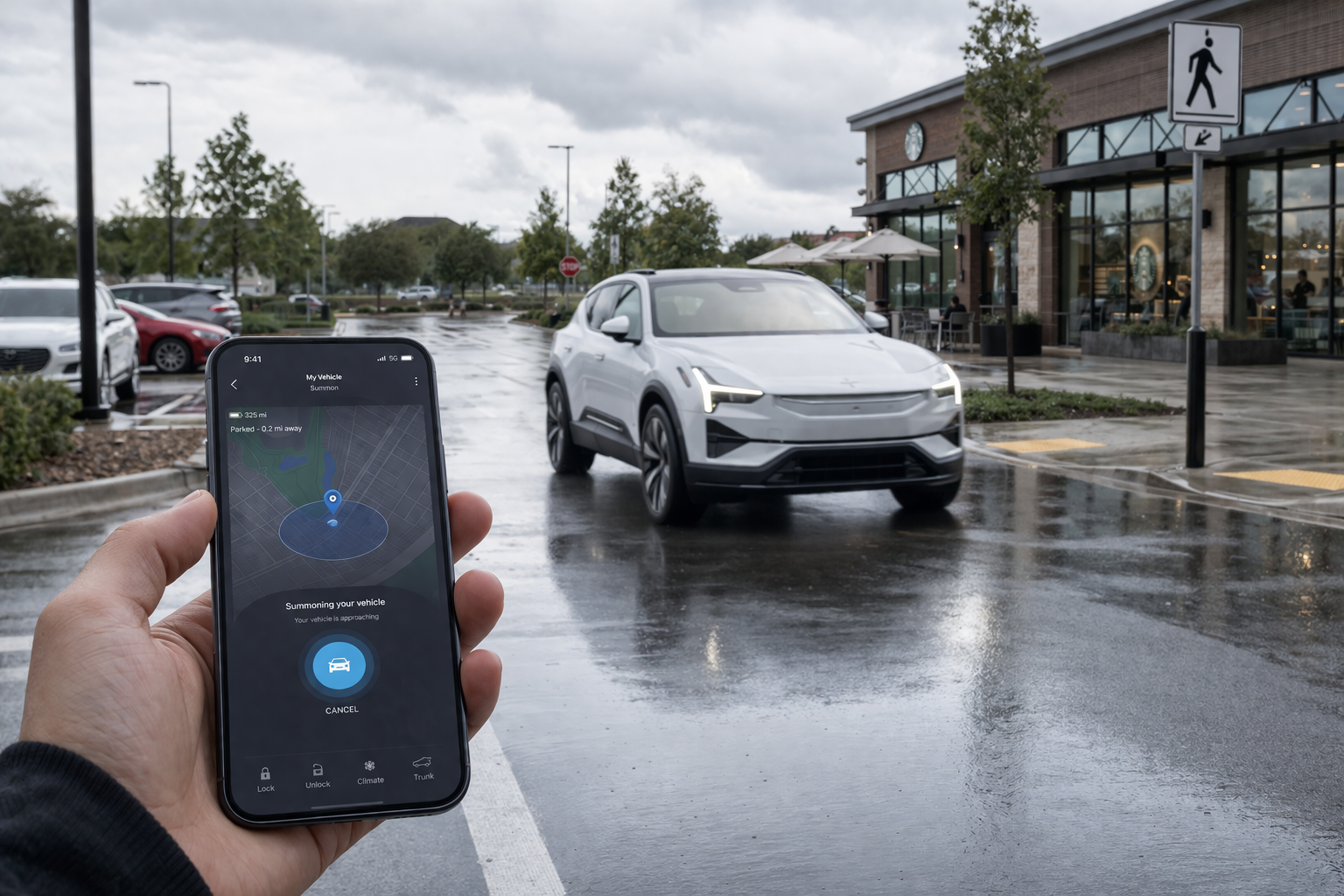
The National Highway Traffic Safety Administration (NHTSA) has officially closed its investigation into Tesla’s remote driving feature, known as “Actually Smart Summon,” following a series of software updates and a review of incident data.
The probe, which covered nearly 2.6 million vehicles, was initially launched in early 2025 after reports of crashes involving the feature. However, regulators concluded that the system was primarily associated with low-speed incidents that resulted in minor property damage, rather than serious safety risks.
Low-Speed Incidents, No Injuries
The “Actually Smart Summon” feature allows Tesla owners to move their vehicles remotely over short distances—typically in parking lots or private property—using a smartphone app.
According to NHTSA, around 100 incidents were reported, most involving vehicles striking stationary objects such as parked cars, garage doors, or gates. These events often occurred early in the remote driving process, when visibility or situational awareness may have been limited.
Importantly, the agency found no reports of injuries, fatalities, airbag deployments, or severe crashes requiring vehicles to be towed. Based on this, regulators determined that the frequency and severity of incidents did not justify further enforcement action.
Software Updates Address Key Issues
Tesla responded to the concerns through a series of over-the-air software updates aimed at improving the system’s performance.
These updates enhanced obstacle detection capabilities, improved the vehicle’s ability to identify camera obstructions, and refined responses to moving objects such as gates. Additional improvements were made to reduce errors caused by environmental conditions like snow or condensation affecting camera visibility.
The updates played a key role in NHTSA’s decision to close the investigation.
Continued Scrutiny of Self-Driving Features
While the probe into the Summon feature has been closed, Tesla’s broader driver-assistance technologies remain under regulatory review.
NHTSA recently escalated a separate investigation into Tesla’s Full Self-Driving (FSD) system to an “engineering analysis,” a more advanced stage that can precede a recall. That review now covers approximately 3.2 million vehicles.
Earlier investigations have examined reports of traffic violations and crashes linked to FSD, with regulators raising concerns about system behavior, visibility limitations, and whether drivers receive adequate warnings in real-world conditions.
Balancing Innovation and Safety
The closure of the Summon probe highlights the evolving relationship between automotive innovation and regulatory oversight. Features like remote vehicle control and advanced driver assistance systems are becoming increasingly common, but they also introduce new safety considerations.
For Tesla, the outcome underscores the importance of continuous software improvements in addressing regulatory concerns and enhancing system performance.
As autonomous and semi-autonomous technologies continue to develop, regulators are expected to maintain close scrutiny—ensuring that innovation is balanced with safety and accountability on the road.