
Zero Trust Security & Cloud Governance in 2026: Trust Nothing, Secure Everything
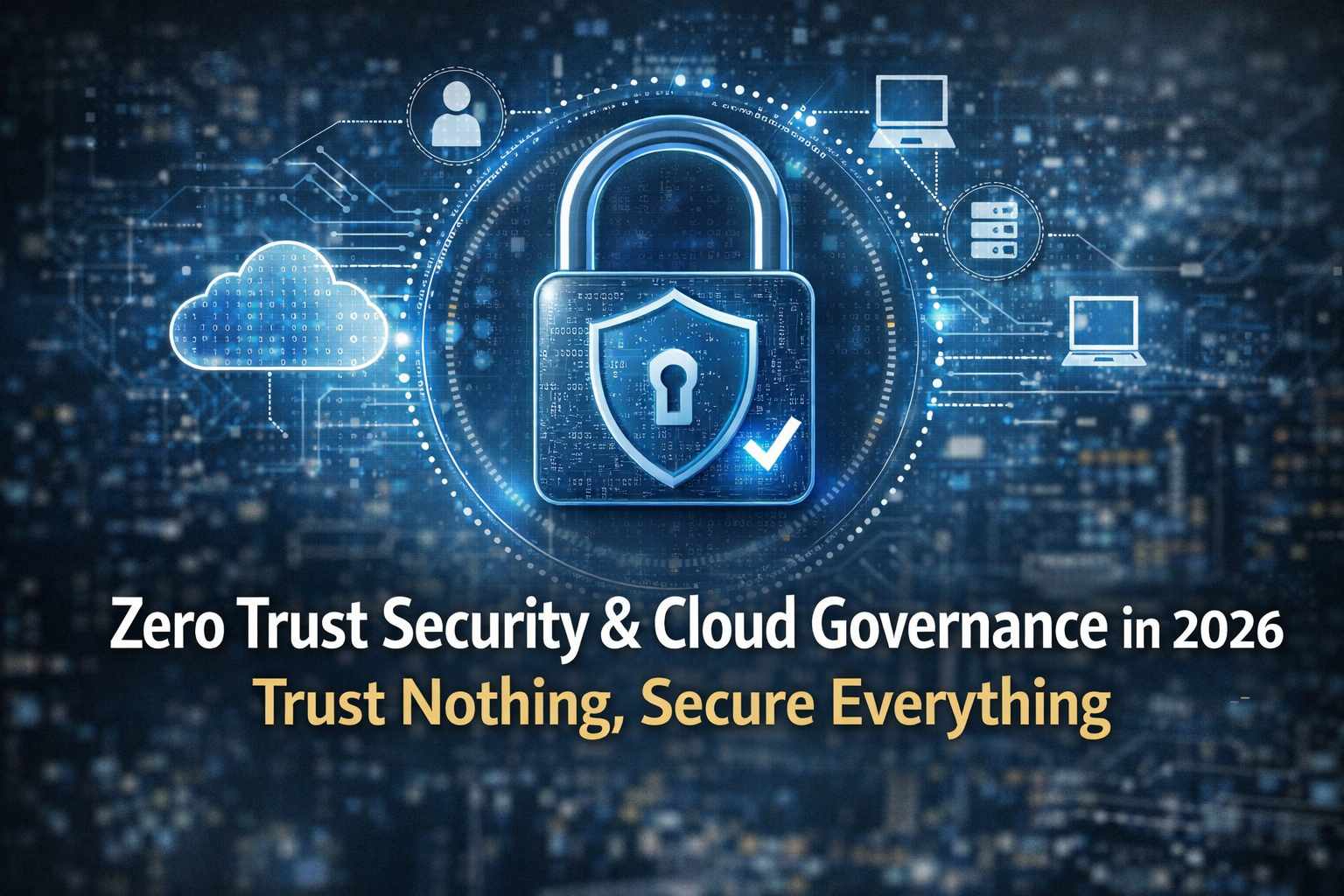
In 2026, cloud adoption has reached a point where security can no longer be treated as an add-on—it has become the foundation. As businesses operate across multi-cloud, hybrid, and edge environments, the traditional idea of a secure perimeter has completely disappeared. This is where Zero Trust security comes in. The concept is simple but powerful: never trust, always verify. Every user, device, and system must continuously prove its identity before accessing resources, regardless of whether it’s inside or outside the network.
What’s driving this shift is the growing complexity of cloud environments and the rise in sophisticated cyber threats. Employees are working remotely, applications are distributed, and data is flowing across multiple platforms. In such a dynamic setup, relying on old security models is risky. Zero Trust ensures that access is granted based on strict identity verification, real-time monitoring, and least-privilege principles. At the same time, cloud governance is becoming equally critical, helping organizations define clear policies around data usage, compliance, and access control.
Businesses are now combining Zero Trust with advanced technologies like AI-driven threat detection and automated security responses. Instead of reacting to breaches after they happen, systems can identify unusual behavior instantly and take action before damage is done. Strong governance frameworks also ensure that teams follow consistent security practices across all cloud environments, reducing vulnerabilities and improving compliance with global regulations. This combination of security and governance is helping organizations build trust while scaling their cloud operations.
Looking ahead, Zero Trust is set to become the default security model for all cloud infrastructure. Companies that embrace it early will not only reduce risk but also gain a competitive advantage by building secure, reliable digital ecosystems. In a world where data is one of the most valuable assets, securing it is no longer optional—it’s essential for growth, reputation, and long-term success.




- « Previous
- 1
- …
- 14
- 15
- 16