

Korean AI chip startup DeepX prepares public share offering
South Korean AI chip startup DeepX has announced plans to pursue a domestic initial public offering, with the potential for a future listing in the United States as it looks to scale its presence in the global semiconductor market. The company, which specialises in on-device AI chips, said it will begin selecting banks to manage…

Nissan Motor to Streamline Lineup and Expand AI Driving Technology in Turnaround Push
Nissan Motor has outlined a sweeping long-term strategy aimed at revitalising its global business, including plans to reduce its vehicle lineup and significantly expand the use of artificial intelligence in its driving technologies. The Japanese automaker said it will cut the number of models in its global portfolio from 56 to 45, focusing on higher-performing…

Novo Nordisk Partners with OpenAI to Accelerate Drug Development and Operations
Danish pharmaceutical giant Novo Nordisk has announced a strategic partnership with OpenAI to integrate artificial intelligence across its business, aiming to accelerate drug development and improve operational efficiency. The collaboration comes as Novo Nordisk seeks to strengthen its position in the fast-growing weight-loss drug market, where it faces increasing competition from Eli Lilly. AI Across…

OpenAI’s $852 Billion Valuation Faces Investor Scrutiny Amid Strategic Shift
OpenAI’s soaring $852 billion valuation is coming under increased scrutiny from some of its own investors, as the company pivots its focus toward enterprise markets in response to intensifying competition across the artificial intelligence sector. According to a report by the Financial Times, the concerns emerge despite OpenAI securing a record-breaking $122 billion funding round…

Yangtze Memory Technologies Plans Major Expansion as U.S.–China Tech Tensions Intensify
Yangtze Memory Technologies (YMTC), China’s leading producer of NAND flash memory chips, is preparing to significantly expand its manufacturing footprint with plans to build two additional semiconductor fabrication plants, according to sources familiar with the matter. The expansion would come on top of a third facility nearing completion, and together the three new plants are…

Meta Platforms Set to Overtake Google in Global Ad Revenue by 2026, Report Finds
Meta Platforms is projected to surpass Google in global digital advertising revenue for the first time by the end of 2026, marking a significant shift in the competitive dynamics of the online advertising market. According to research firm Emarketer, Meta’s global net ad revenue is expected to reach approximately $243.46 billion in 2026, slightly ahead…

Anthropic Engages Trump Administration on New AI Model Despite Pentagon Dispute
Anthropic is in active discussions with the Trump administration regarding its latest frontier AI model, even as tensions persist with the U.S. Department of Defense following a recent contract dispute. Speaking at a policy event in Washington, D.C., Anthropic co-founder Jack Clark confirmed that the company is engaging government officials about its newly announced model,…
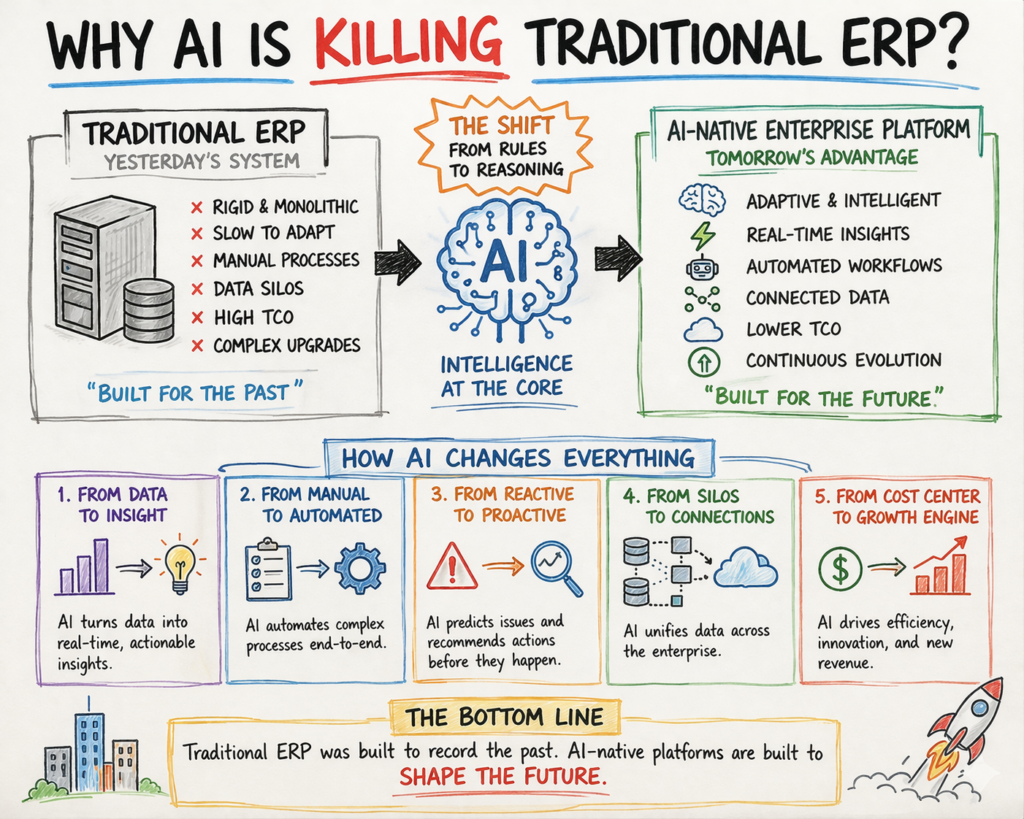
The Death of Traditional ERP: AI Replacing Enterprise Systems
For decades, Enterprise Resource Planning (ERP) systems have been the backbone of modern organizations. From finance and supply chains to HR and procurement, ERPs promised a single source of truth—a centralized system to manage business operations efficiently. Companies invested millions implementing, customizing, and maintaining these systems, often treating them as the “brain” of the enterprise….

Autonomous Cyber Defense: AI Systems That Fight Hackers in Real-Time
Cybersecurity has always been a race—attackers innovate, defenders react. For decades, organizations have relied on firewalls, antivirus software, and human analysts to detect and respond to threats. But the nature of cyberattacks has changed. Today’s threats are faster, more sophisticated, and often powered by artificial intelligence themselves. In this environment, traditional, reactive defense models are…
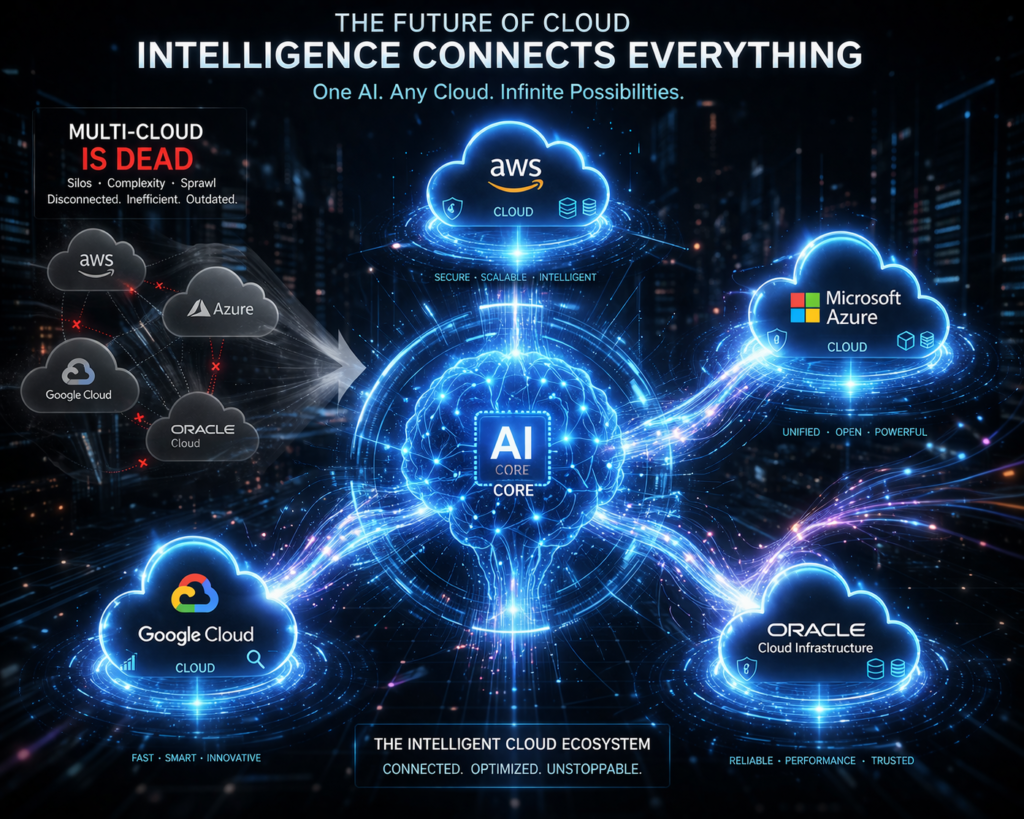
Multi-Cloud Is Dead—Welcome to AI-Orchestrated Cloud Ecosystems
For years, “multi-cloud” was the answer to everything. Avoid vendor lock-in. Improve resilience. Optimize costs. Gain flexibility. Enterprises proudly declared their multi-cloud strategies, spreading workloads across platforms like Amazon Web Services, Microsoft Azure, and Google Cloud. But beneath the surface, multi-cloud never quite delivered on its promise. It solved one problem—dependency—while quietly introducing others: complexity,…

Post-Cloud Era: What Comes After Centralized Hyperscalers?
For more than a decade, cloud computing has been defined by centralization. A handful of hyperscalers—massive, globally distributed platforms—have become the backbone of the digital economy. From startups to governments, organizations have relied on centralized cloud providers to store data, run applications, and scale operations on demand. It was a revolution that replaced physical infrastructure…

Autonomous AI Employees: Designing Organizations Where Agents Replace Roles
The idea of an “employee” is evolving faster than most organizations are prepared for. For decades, companies have been structured around human roles—job titles, departments, and clearly defined responsibilities. But with the rise of autonomous AI agents, this model is beginning to shift in a fundamental way. We are entering an era where work is…