The Psychology Behind Notification Addiction
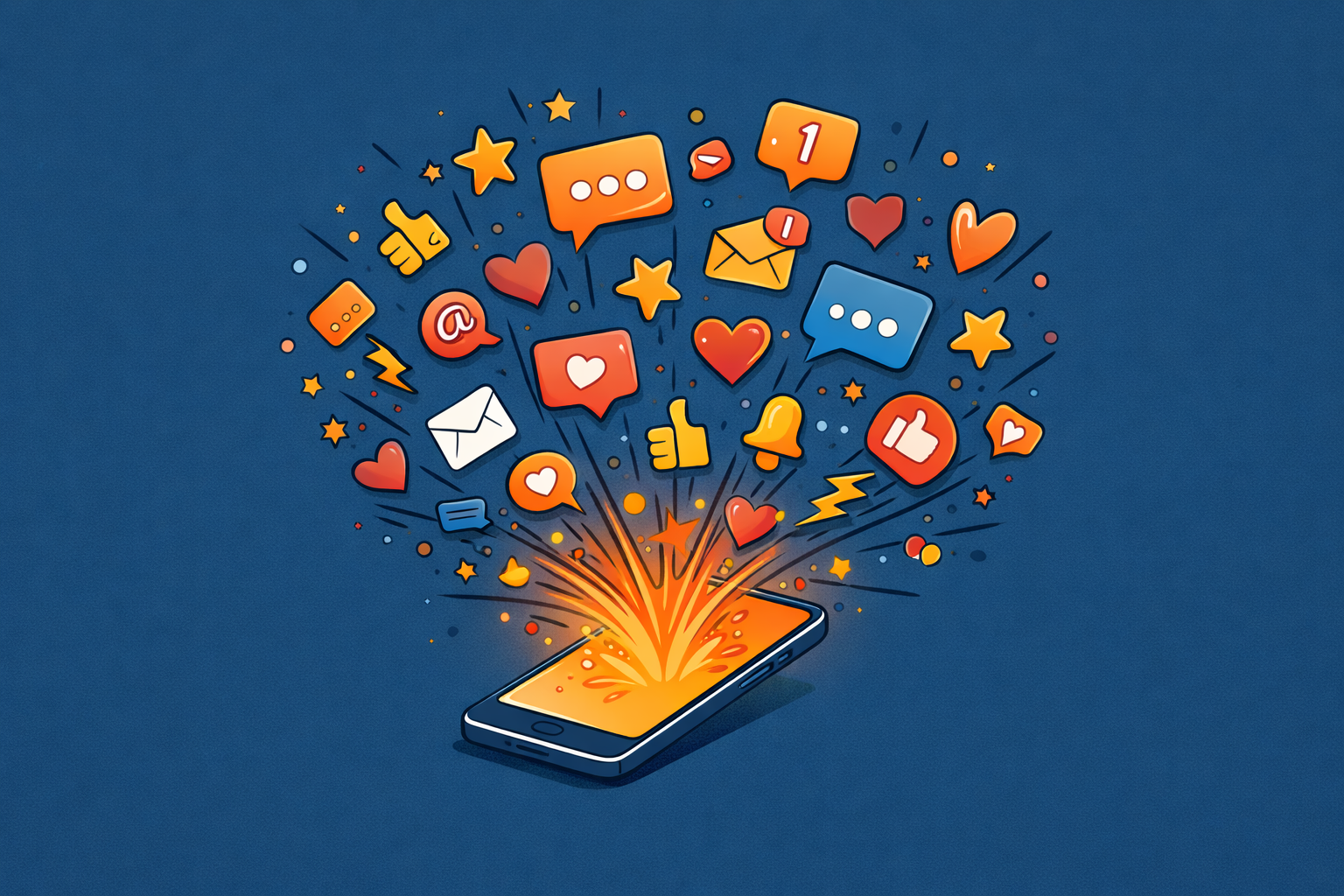
There’s a familiar moment most of us experience dozens—if not hundreds—of times a day. A subtle vibration. A small red badge. A chime that cuts through silence. Almost instinctively, your attention shifts. You reach for your phone, even if you were in the middle of something important. You check. You scroll. And often, within seconds, you return to what you were doing—slightly more distracted than before.
This isn’t случай. It’s design.
Notification addiction isn’t just about habit or lack of discipline. It’s deeply rooted in human psychology. The systems that drive our response to notifications tap into fundamental cognitive and behavioral mechanisms—reward, uncertainty, social validation, and fear of missing out. Understanding these forces reveals why notifications are so hard to ignore, and why they have such a powerful impact on our focus and productivity.
At the core of notification addiction is the brain’s reward system. Every time you receive a notification, your brain anticipates something potentially valuable. It could be a message from a friend, a work update, a like on a post, or something entirely unexpected. This anticipation triggers the release of dopamine, a neurotransmitter associated with motivation and reward.
What’s important here is that dopamine isn’t about pleasure—it’s about anticipation. It drives the urge to check, not necessarily the satisfaction afterward. In many cases, the reward is small or even disappointing. But the possibility that the next notification might be meaningful keeps the cycle going.
This is where the concept of variable rewards comes in. Borrowed from behavioral psychology, variable rewards are unpredictable outcomes delivered at irregular intervals. They are the same mechanism that makes slot machines addictive. You don’t win every time, but you don’t know when the next win will come. That uncertainty keeps you engaged.
Notifications operate on the same principle. Most of them are low-value—routine updates, automated alerts, or messages that don’t require immediate attention. But occasionally, one is important or emotionally rewarding. That unpredictability conditions you to check every time, just in case.
Over time, this creates a feedback loop. You receive a notification, you check it, you get a small reward (or the possibility of one), and your brain reinforces the behavior. Eventually, the act of checking becomes automatic. You may find yourself unlocking your phone without even remembering why.
Social validation adds another powerful layer. Humans are inherently social beings, and our brains are wired to seek approval and connection. Notifications from social platforms—likes, comments, shares—tap directly into this need. Each interaction becomes a signal of recognition, a small affirmation that what you said or shared matters.
Even in professional settings, this dynamic is present. A message from a colleague, a quick reply from a manager, or a new task assignment can all carry implicit signals about status, relevance, and belonging. Ignoring these signals can feel uncomfortable, even risky, which reinforces the urge to respond quickly.
Then there’s the fear of missing out, or FOMO. Notifications create a sense that something is always happening somewhere, and that you need to stay connected to keep up. Whether it’s a conversation, an opportunity, or a piece of information, the possibility of missing something important keeps you tethered to your devices.
This constant state of anticipation has a cost. Every time a notification interrupts your focus, it forces your brain to switch contexts. Even if you only glance at the notification, your attention shifts. When you return to your original task, it takes time to regain the same level of concentration. Multiply this by dozens of interruptions throughout the day, and the impact on productivity becomes significant.
But the effects go beyond productivity. Notification addiction can also increase stress and reduce overall well-being. The feeling of being constantly “on call” creates a low-level sense of urgency that never fully disappears. Your mind remains partially occupied, even during moments that should be restful.
Interestingly, many people are aware of this impact, yet still struggle to change their behavior. This is because notification addiction operates largely at a subconscious level. It’s not just a choice—it’s a conditioned response shaped by repeated reinforcement.
Technology companies are not unaware of these dynamics. In fact, many products are intentionally designed to maximize engagement. Notifications are timed, personalized, and optimized to draw you back into the app. The more frequently you return, the more data is generated, and the more valuable the platform becomes.
This doesn’t mean all notifications are harmful. Some are genuinely useful. They can keep you informed, connected, and responsive. The problem arises when the volume and frequency of notifications exceed your ability to process them meaningfully.
Breaking the cycle doesn’t require abandoning technology altogether. It starts with awareness. Recognizing that your response to notifications is not purely rational—but influenced by psychological triggers—gives you the power to make more intentional choices.
One of the most effective steps is reducing unnecessary notifications. Not every app needs permission to interrupt you. By limiting alerts to only what truly matters, you can significantly reduce cognitive noise.
Another approach is creating intentional boundaries. This might mean setting specific times to check messages, using focus modes during deep work, or keeping your phone out of reach when you need to concentrate. These small changes help retrain your brain to respond less impulsively.
Over time, you can shift from a reactive relationship with technology to a more controlled one. Instead of being pulled by every alert, you decide when and how to engage.
The psychology behind notification addiction reveals something important about the modern digital experience. The tools we use are not neutral—they are designed to capture attention. But attention is a finite resource, and how we choose to spend it shapes not only our productivity, but also our sense of control and well-being.
In a world where everything is competing for your attention, the ability to protect it becomes a skill. And perhaps, one of the most valuable ones we can develop.